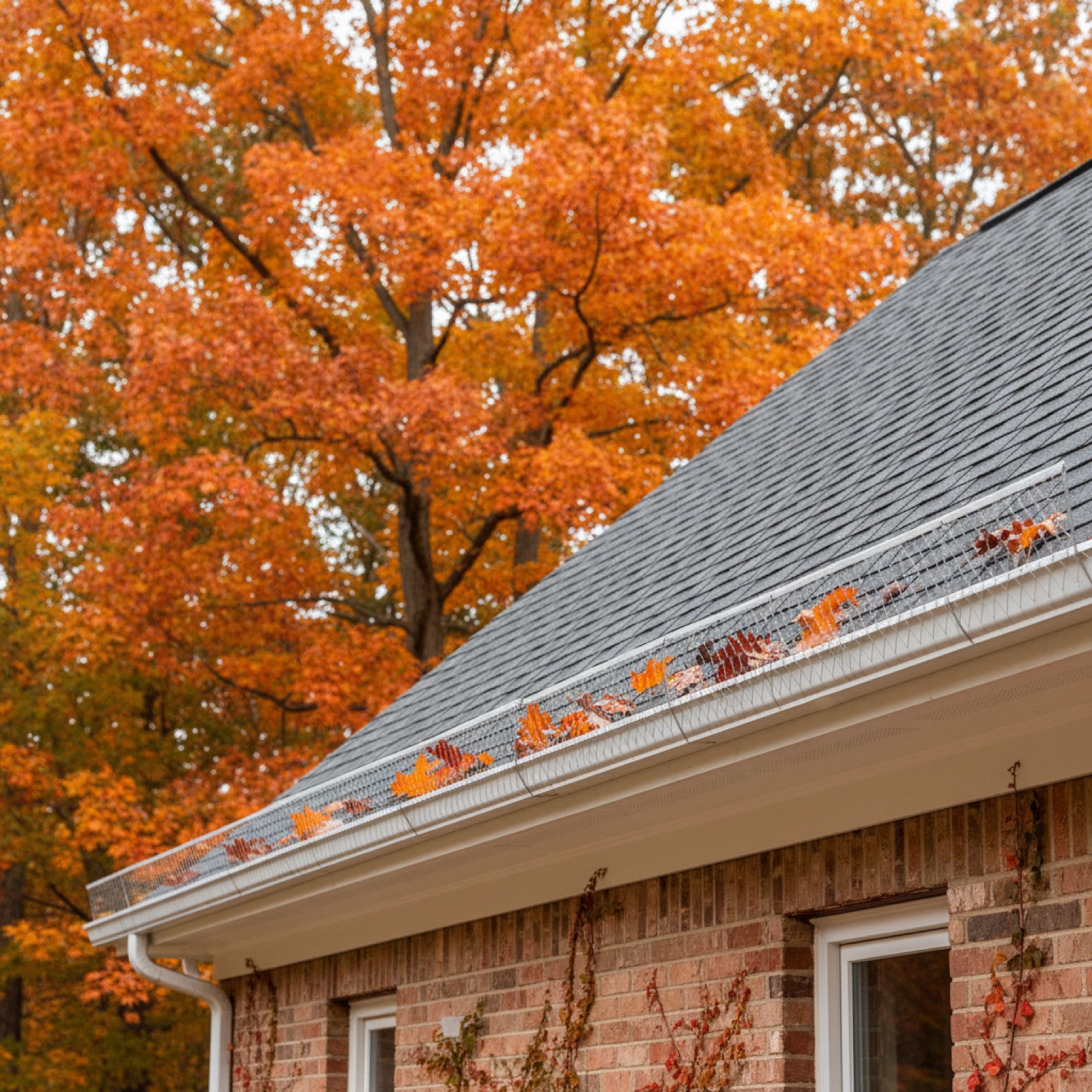
Are Gutter Guards Worth It? An Honest Look for Middle Tennessee Homes
Are gutter guards worth it? For most Middle Tennessee homes with mature trees nearby, yes: a good gutter guard keeps leaves out, cuts down on ladder trips, and helps water reach your downspouts during heavy storms. They are less worth it on a single-story home with no trees overhead, and cheap guards that clog or sag can cause more trouble than they solve. The type of guard and the quality of the installation make all the difference.
We have been installing seamless gutters and gutter protection across Murfreesboro and Middle Tennessee since 2023, and we manufacture our own guard, so we spend a lot of time answering this question honestly. Here is how to decide whether gutter guards make sense for your home, and when the answer to “are gutter guards worth it” is no.
Key Takeaways
Here is the short answer before we dig into the details.
- Gutter guards pay off most on homes with oak, maple, tulip poplar, or pine trees nearby, two-story rooflines, or owners who would rather not climb ladders.
- Fine micro-mesh guards stop the small debris that slips through screens and perforated covers, while still letting heavy rain through.
- In This Old House’s 2026 survey, major national gutter-guard installers averaged roughly $40 to $62 per linear foot, so pricing varies widely by product and company.
- No guard is truly maintenance-free. Expect an occasional rinse or inspection, especially after heavy pollen or leaf seasons.
Do Gutter Guards Work in Middle Tennessee?
Gutter guards work when they match the debris your trees actually drop. Middle Tennessee’s canopy is heavy with oak, maple, and tulip poplar, and from late September through December those trees drop a steady stream of leaves, seed pods, twigs, and catkins. Pine needles add another challenge on many lots. A guard that blocks big leaves but lets needles and seed pods through will still clog, just more slowly.
The good news is that a well-designed guard handles all of it. When homeowners ask whether gutter guards work, our answer is that the right guard does, and the wrong one creates a different problem. The federal Building America Solution Center guide to gutters and downspouts recommends leaf guards to prevent the buildup of leaves and plant debris, and points out that gutters and downspouts only protect a home when water actually reaches the ground at least 5 feet from the foundation.
That foundation point matters here. Much of Middle Tennessee sits on red clay soil, which does not drain quickly. When a clogged gutter overflows during a spring downpour, the water lands right at the foundation line and stays there, leading to damp crawl spaces, settling, and cracked slabs. You can read more about how drainage and soil affect gutter systems on our seamless gutter installation page.
What Are the Main Types of Gutter Guards?
Gutter guards fall into a few broad categories, and each handles debris differently:
- Screens. Plastic or metal screens with large openings. Inexpensive and easy to install, but small debris and seed pods slip through, and cheap screens can sag or blow loose.
- Perforated metal covers. Solid aluminum sheets with punched holes. Sturdier than screens, though the holes can still pass small debris and clog with pine needles.
- Micro-mesh. A fine stainless or aluminum mesh over a supporting frame. It stops pollen-sized debris while letting water through, and it is the most effective style for mixed tree cover.
- Reverse-curve or surface-tension covers. Water follows a curved lip into the gutter while leaves slide off. They can work well, but in very heavy rain water may overshoot the curve.
- Foam and brush inserts. Inserts that sit inside the gutter. They are cheap, but they trap debris and can hold moisture, so they need frequent cleaning.
Our own guard, the FlowShield All-Star, is a raised micromesh design that we make ourselves, and no other installer in Tennessee carries it. The fine mesh keeps leaves and small debris out while heavy rain runs straight through, and the raised profile helps debris dry and blow off instead of matting down on top.
Gutter Guards Pros and Cons: An Honest Comparison
Every homeowner’s situation is different, so it helps to lay out the real gutter guards pros and cons before deciding.
The advantages:
- Far fewer clogs, which means water reaches your downspouts during heavy storms.
- Fewer ladder trips, a real safety benefit for two-story homes and for anyone who would rather keep both feet on the ground.
- Less standing water and debris, which discourages pests and nesting animals.
- Better winter performance, since clear gutters are less likely to back up and freeze during Middle Tennessee ice storms.
The drawbacks:
- Upfront cost, especially for professionally installed micro-mesh systems.
- Some maintenance remains. Fine mesh can collect a film of pollen or roof grit that needs an occasional rinse.
- Poor installation can cause problems, including guards that lift shingles, sag, or let water overshoot the gutter.
- Guards cannot fix gutters that are undersized, poorly sloped, or pulling away from the fascia.
That last point is important. If your existing gutters are failing, adding a guard on top just protects a system that does not work. In that case, new seamless gutters with a guard installed at the same time is usually the better investment.
How Much Does Gutter Guard Installation Cost?
Gutter guard installation cost depends on the type of guard, the length of your gutters, the height and pitch of your roof, and whether the gutters need repairs first. DIY screens from a home center cost very little per foot, but they rarely last or perform like a professionally installed system.
For professionally installed micro-mesh systems, national pricing runs much higher. In This Old House’s 2026 survey of gutter costs, the major national gutter-guard companies it tracked averaged roughly $40 to $62 per linear foot. Our pricing is based on your actual home after a free inspection, and you can choose to add a guard to new seamless gutters or have one installed on the gutters you already have.
When you weigh whether gutter guards are worth it on cost alone, include what you are replacing: regular cleaning visits or your own time on a ladder, plus the cost of water damage to fascia, foundations, and landscaping when gutters overflow. For a home with heavy tree cover, those savings add up quickly.
So, Are Gutter Guards Worth It for Your Home?
A quick way to answer the question is to look at your roofline and your trees. Gutter guards are usually worth it if:
- You have trees within about 30 feet of the house, or trees that overhang the roof.
- Your home is two stories or has steep or hard-to-reach rooflines.
- You clean your gutters more than twice a year, or you have seen water spilling over the edge during storms.
- You plan to stay in the home long enough to benefit from years of reduced maintenance.
They may not be worth it if you have a single-story home with no trees nearby, easy roof access, and gutters that stay clear on their own. In that case, routine cleaning once or twice a year is the more economical choice.
If you are not sure, a free inspection settles it. We look at your full system, including the roof edge, gutters, downspouts, and drainage, and our Middle Tennessee roofing team checks the shingles along the eaves at the same time, since gutters and roofs work as one system. You can see the full range of gutter, roofing, and siding work we do on our gutter guard and exterior services page.
Gutter Guard Questions From Middle Tennessee Homeowners
Here are the gutter guard questions we hear most often around Murfreesboro.
Do gutter guards work with heavy rain?
A quality micro-mesh guard handles heavy rain well, because water passes through the mesh and into the gutter while debris stays on top. Problems with heavy rain usually come from reverse-curve guards that let water overshoot, or from gutters that are too small for the roof. A properly sized 6-inch seamless gutter paired with a good guard handles Middle Tennessee downpours.
Do you still have to clean gutters with gutter guards?
Much less often, but occasionally. Micro-mesh guards keep leaves and seed pods out of the gutter, but a thin film of pollen or roof grit can build up on top. Most homeowners find a light rinse or brushing every year or two is enough, compared with cleaning open gutters several times each fall.
Can gutter guards be installed on existing gutters?
Yes, as long as the gutters are in good shape, properly sloped, and securely attached. Many guards, including the FlowShield All-Star, can go on existing gutters. If the gutters are sagging, leaking at the seams, or undersized, replacing them with seamless gutters first is the better long-term investment.
Do gutter guards cause ice dams?
Gutter guards do not cause ice dams on their own. Ice dams form when snow or freezing rain melts and refreezes at a cold roof edge. Clogged, overflowing gutters make ice problems worse, so a guard that keeps gutters draining can actually help during Middle Tennessee ice storms. Good attic ventilation and insulation remain the main defense.
If you are tired of cleaning leaves out of your gutters every fall, schedule a free inspection with FlowShield Exteriors and we will give you an honest recommendation, a written estimate good for a full year, and financing options through Synchrony or Foundation if you want them. Request your free gutter inspection today.